The Eight Limbs of Yoga: A Complete Guide to the Path of Yoga
Yoga is far more than physical postures. According to the ancient wisdom of Patanjali’s Yoga Sutras, yoga is a holistic path of self-transformation known as the Eight Limbs of Yoga (Ashtanga Yoga). These eight limbs form a step-by-step guide to living a meaningful, balanced, and spiritually awakened life.
At Hatha Yoga World, we honor yoga in its complete form, as a way of living, not just a practice on the mat. In this guide, we explore each of the 8 limbs of yoga, their meaning, and how they support your journey toward inner peace, clarity, and freedom.
What Are the Eight Limbs of Yoga?
The Eight Limbs of Yoga were outlined by the sage Patanjali over 2,000 years ago in the Yoga Sutras. Rather than stages to “complete,” the limbs are interconnected practices that together create harmony between body, breath, mind, and spirit.
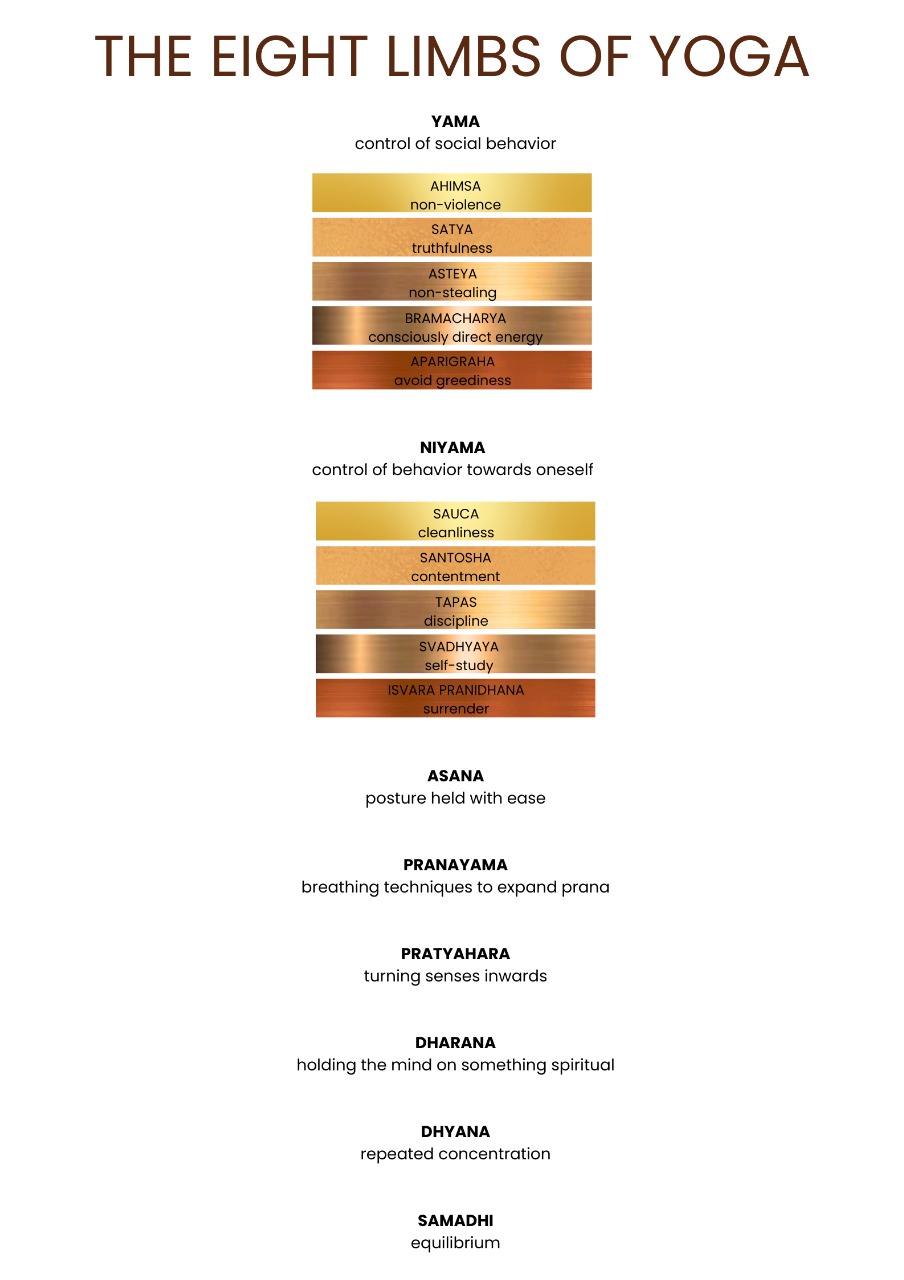
The eight limbs are:
1. Yama – Ethical disciplines
2. Niyama – Personal observances
3. Asana – Physical postures
4. Pranayama – Breath regulation
5. Pratyahara – Withdrawal of the senses
6. Dharana – Concentration
7. Dhyana – Meditation
8. Samadhi – Enlightenment
1. Yama: Ethical Foundations of Yoga
Yama refers to moral restraints and how we relate to the world around us. These principles cultivate compassion, integrity, and conscious living.
The five Yamas are:
1. Ahimsa – Non-violence in thought, word, and action
2. Satya – Truthfulness and authenticity
3. Asteya – Non-stealing, including time and energy
4. Brahmacharya – Wise use of life force and energy
5. Aparigraha – Non-greed
Practicing Yama creates a foundation of ethical living that supports deeper yoga practices and healthier relationships.
2. Niyama: Inner Discipline and Self-Care
Niyama focuses on personal practices that nurture inner awareness and self-development.
The five Niyamas are:
1. Saucha – Cleanliness of body, mind, and environment
2. Santosha – Contentment and acceptance
3. Tapas – Discipline and commitment
4. Svadhyaya – Self-study and reflection
5. Ishvara Pranidhana – Surrender to a higher consciousness
At Hatha Yoga World, Niyama is reflected in mindful practice, consistency, and devotion to self-growth.
3. Asana: Yoga Postures Held with Ease
Asana is the most well-known limb of yoga in modern practice. However, its original purpose is to prepare the body for meditation by building strength, flexibility, and stability.
In classical yoga, asana is defined as a steady and comfortable posture. Through Hatha Yoga, we cultivate awareness, alignment, and balance.
Benefits of asana include:
1. Improved physical health
2. Nervous system regulation
3. Mind-body connection
4. Pranayama: Expansion of Life Force Through Breath
Pranayama is the practice of conscious breathing to regulate prana, the vital life energy.
Common pranayama techniques include:
Nadi Shodhana (alternate nostril breathing)
1. Ujjayi breath
2. Kapalabhati
3. Bhramari
Breathwork calms the mind, energizes the body, and prepares the practitioner for meditation.
5. Pratyahara: Turning the Senses Inward
Pratyahara is the bridge between the external and internal practices of yoga. It involves withdrawing attention from sensory distractions and cultivating inner awareness.
In a world of constant stimulation, pratyahara helps:
1. Reduce mental overload
2. Increase focus
3. Develop emotional balance
This limb teaches us that peace comes from within.
6. Dharana: Focused Concentration
Dharana is the practice of sustained concentration on a single object, sound, breath, or point of awareness.
Examples include:
1. Mantra repetition
2. Gazing (Trataka)
3. Focus on breath or chakra
Dharana trains the mind to remain present and steady, laying the groundwork for meditation.
7. Dhyana: Meditation
Dhyana is meditation and a continuous, uninterrupted flow of awareness. Unlike concentration, meditation is effortless and expansive.
Through regular meditation practice, one experiences:
1. Inner stillness
2. Emotional clarity
3. Deep connection to divine consciousness
8. Samadhi: Union with Source and Enlightenment
Samadhi is the culmination of the yogic path. It’s a state of profound peace, unity, and realization. In samadhi, the sense of separation dissolves and one experiences oneness with all existence.
Rather than a destination, samadhi is a state of being that unfolds through sincere practice and devotion.
Living the Eight Limbs of Yoga
The Eight Limbs of Yoga remind us that yoga is not just something we do, it is something we live. From ethical living and mindful movement, to meditation and surrender, each limb supports a life of awareness and harmony.
At Hatha Yoga World, we guide students to experience yoga in its full depth honoring tradition while supporting modern life.
Practice Yoga as a Way of Life
Explore Hatha Yoga, pranayama, and meditation with Hatha Yoga World, where ancient wisdom meets conscious living.
